Ruaha is the park many safari guides quietly name when they are asked where they would go with a week of their own. It is vast, baobab-studded and far less busy than the northern circuit, with a reputation for lions, elephants, wild dogs and a raw, open landscape cut by the Great Ruaha River. For travellers who have already seen the Serengeti, or who simply want more space, it is one of the most satisfying wildlife areas in Tanzania.
The park sits in the south-central interior, with Iringa as the usual gateway town. You can fly in, or drive from Iringa in a couple of hours once you are already in the highlands. This guide covers what makes Ruaha different, when to go, how to get there, and how a stay of three or four nights usually works.
Why Ruaha Feels Different
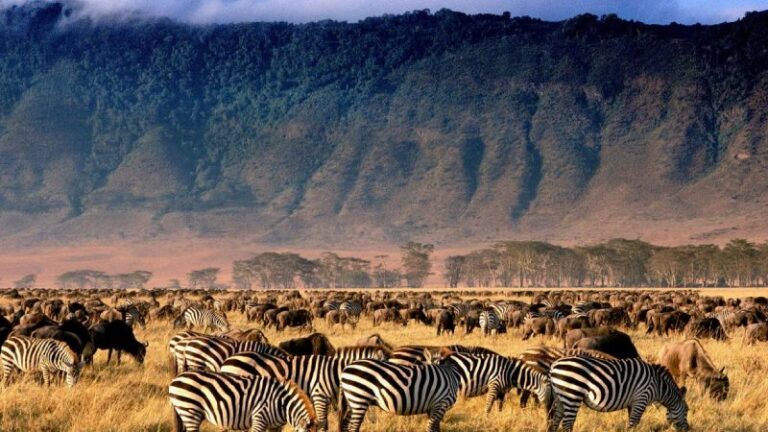
Size is the first impression. After its expansion, Ruaha became Tanzania’s largest national park, and the countryside still feels that way: long views, rocky hills, dry woodland and riverine forest rather than a procession of vehicles around a single kopje. The second impression is the mix of wildlife. This is a transition zone between eastern and southern African habitats, which is why you may see both greater kudu and the more familiar northern plains species in the same day.
Predators are a particular draw. Ruaha is known for large lion prides and for African wild dogs, though dogs are never guaranteed. Elephants use the river and the remaining waterholes heavily in the dry season, and giraffe, zebra, impala, buffalo and a strong bird list fill the spaces between the headline sightings. The park is also one of the better places in Tanzania for a walking safari, because the terrain and the quieter roads make a guided walk feel natural rather than like a staged extra.
Giant baobabs, kopjes and the Great Ruaha River define the core area most visitors explore around Msembe.
Excellent predator country, with reliable dry-season elephant viewing and a real chance of wild dogs if you give the park enough days.
You still meet other cars at a good sighting, but the park rarely feels crowded in the way central Serengeti can in peak season.
Best Time to Visit Ruaha
The dry season from June to October is the most straightforward time. Water is concentrated, grass is shorter, and wildlife gathers along the river and around remaining pools. Days are generally clear and warm, and nights can be surprisingly cool. This is also when most camps are fully open and when walking safaris are easiest to arrange.
The green season, roughly from November to May, has a different appeal: dramatic skies, newborn animals, excellent birding and even more solitude. Some camps close in the long rains, and black-cotton soil can make certain tracks difficult, especially in April and May. If you like photography and do not mind some afternoon rain, January to March can be outstanding. For a country-wide seasonal overview, see the best time to visit Tanzania.
How to Get to Ruaha
By air
Scheduled and shared charter flights run from Dar es Salaam, Zanzibar and sometimes Arusha to airstrips in or beside the park, most commonly in the Msembe area. The flight is the most comfortable option and turns Ruaha into a realistic combination with a northern safari or a beach week. Flight schedules change with the season, so the safari should be built around the aircraft, not the other way around.
By road via Iringa
Iringa is the practical road base. From town, the drive to the park entrance and on to the main camp area typically takes around two to three hours, depending on the road and your exact lodge. The wider journey to Iringa itself can be a long drive from Dar es Salaam or a stop on a southern itinerary through the highlands. A multi-day Ruaha safari from Iringa is the usual road-based way to do it, and a transfer in Iringa helps if you are flying into the town airstrip rather than the park.
- A Ruaha multi-day safari is the right format from Iringa.
- Add a Ruaha walking safari if you want time out of the vehicle.
- Combine the south on the Nyerere and Ruaha Safari tour.
How Many Nights You Need
Two nights is a taste. Three nights, with two full days of game viewing, is the minimum we like to recommend. Four or five nights is better if you want a walk, a slower full-day drive and the chance to cover more than one area of the park. Ruaha is not a place where everything happens along a single loop near the gate.
A day trip from Iringa is possible, and there is a Ruaha day safari for travellers with a tight schedule, but you will spend a large part of the day on the road and only a short time in the park. Overnight is a completely different experience.
Walking Safaris and Other Ways to Explore
Guided walks with an armed ranger are one of Ruaha’s strengths. You move at human speed, look at tracks, birds, trees and the smaller details a vehicle rolls past, and you may still see larger animals at a respectful distance. Walks are usually in the early morning and need to be arranged in advance. They are not a substitute for game drives, but they are one of the best reasons to choose Ruaha over a park where walking is tightly limited.
Most stays still centre on morning and afternoon drives, with a midday rest at camp. Some lodges can arrange hides or longer full-day picnics along the river. Night drives, where they are allowed, depend on the specific area and camp, so ask before you assume they are part of a standard national-park stay.
Typical Costs
Ruaha is not automatically more expensive than the northern circuit, but fly-in logistics and a smaller number of camps can push mid-range prices up. Road-based trips from Iringa are usually more economical if you already have a reason to be in the southern highlands.
| Item | Typical range |
|---|---|
| Mid-range 3 or 4-night fly-in stay, per person sharing | About USD 1,800 to 3,500, including park fees and flights in some packages |
| Road-based safari from Iringa, per person per day | About USD 300 to 600 in a mid-range private vehicle, depending on group size |
| Luxury fly-in camps, per person per night | Often USD 800 to 1,500+, season dependent |
| Domestic flight into the park, one way | Often about USD 200 to 400, depending on the route and season |
Always check whether park fees, transfers from the airstrip and walking permits are included. A cheaper nightly rate can unravel if those items are added later.
Where to Stay
Most first-time visitors stay in the core area near the river and Msembe, where game viewing is consistent and transfers are short. There are mid-range lodges and tented camps as well as a few more exclusive properties. Public campsites exist for travellers on a tighter budget with their own support. Because the park is large, a pretty camp in the wrong place can mean long drives before you see much; ask where you will actually be sleeping in relation to the river and the main tracks.
Combining Ruaha with the Rest of Tanzania
Ruaha pairs naturally with Nyerere for a southern safari of a week or more, and with the Iringa highlands if you want a town night, Isimila or a slower overland approach. Many travellers then fly to Zanzibar or Mafia to finish. Combining Ruaha with the Serengeti is also possible, but it works best with a flight rather than a very long road connection. If you only have a week and you are landing at Kilimanjaro, the northern circuit is still the simpler first safari; Ruaha shines when you can give it its own chapter.
Tips and Common Mistakes
- Give Ruaha at least three nights; do not treat it as a single long day from Iringa
- Visit in the dry season for the most reliable wildlife concentrations, unless you specifically want the green season
- Book a walk at the same time as the camp, not as an afterthought
- Combine Ruaha with Nyerere, the southern highlands or a beach, rather than trying to drive it as a quick add-on to a northern week
- Pack a warm layer for early mornings, even if the afternoons are hot
- Leave time in Iringa if you want a town night, a market stop or a visit to Isimila
Frequently Asked Questions
Is Ruaha better than the Serengeti?
It is different, not better in every way. The Serengeti has the migration and a more famous open-plains scene. Ruaha is usually quieter, feels wilder, and is excellent for predators, elephants and walking.
How do I get to Ruaha National Park?
Most visitors fly into a park airstrip, or travel via Iringa and continue by road. The road from Iringa into the park is the standard overland approach.
How many days should I spend in Ruaha?
Three or four nights is a good first stay. Two nights is only enough if your schedule is tight and you accept a shorter look.
Can I visit Ruaha and Zanzibar in one trip?
Yes. Fly between the park and Dar es Salaam or Zanzibar when the schedule allows, rather than trying to drive all the way to the coast on the same day.
Is Ruaha good for a first Tanzania safari?
It can be, especially if you value space and are happy to fly. First-time visitors with limited days still often start with the northern circuit because the logistics from Arusha are simpler.
Get Your Free Custom Tanzania Tour Quote Today!
If Ruaha is on your list, our local team can build a fly-in or Iringa-based stay around the season and the number of nights you have.
Browse Multi-Day Tours Explore Short Excursions