Mikumi is the national park you can actually reach from Dar es Salaam without a flight or a two-day transfer. It sits along the main highway toward the southern highlands, with Morogoro as the nearest town, and it offers a genuine slice of Tanzanian woodland and floodplain: lions, elephants, giraffes, zebras, wildebeest, buffalo and hippos around the waterholes, without the full logistics of Ruaha or the northern circuit.
It is also a park that is easy to underestimate. A rushed day trip can feel like a lot of road and a short game drive. A night or two, with a proper morning in the park, is a different experience. This guide explains how to visit from Dar or Morogoro, what you are likely to see, and when Mikumi is the right choice rather than a longer southern safari.
What Mikumi Is Good For
The park is part of a larger ecosystem that connects toward the Udzungwa Mountains and, more broadly, the old Selous landscape. The area most visitors explore is the relatively open Mkata floodplain and the woodland around it, where game viewing can be surprisingly straightforward. You come for a compact, accessible safari, not for the Great Migration or for days of complete solitude, though once you leave the highway corridor the park can still feel quiet.
Mikumi is ideal if you are landing in Dar, have one or two spare days, and want to see wildlife before a beach flight or a meeting in the city. It is also a logical overnight on an overland journey between Dar es Salaam and Iringa or Ruaha. It is less ideal if it is your only safari in a two-week Tanzania trip and you could reach the Serengeti or Nyerere instead.
A same-day or overnight safari is realistic, with an early start and a 4×4, rather than a flight to a distant airstrip.
Open country around the Mkata area, with classic herds, giraffes, and a good chance of lions and elephants.
The easiest overnight base outside the park, or a stop on the way to the Uluguru Mountains and Udzungwa.
Day Trip or Overnight?
A day trip from Dar es Salaam is possible and popular. You leave early, reach the park mid-morning, take a game drive, and return in the evening. It is a long day, often twelve hours or more door to door, and traffic out of the city can steal the first hour. If this is your only option, it is still worth doing, especially in the dry season when animals are easier to find in a shorter window.
An overnight is better. Sleep at a lodge near the gate or in Morogoro, enter early the next morning, and use the best hours of the day inside the park. Two nights allow a second game drive and a less hurried return to Dar or a continuation south. A Mikumi safari day trip from Morogoro is the shorter-road version of the same idea, and a transfer to Mikumi National Park helps if you are arriving by air or by the SGR railway.
- Book a Mikumi day safari if you are already in Morogoro.
- Travel from the city with a private driver in Dar es Salaam and a vehicle suited to the park.
- If you have more time in the south, continue toward Ruaha or Nyerere.
Best Time to Visit
The dry months from June to October are the most reliable for game viewing, with shorter grass and animals gathering at water. January and February can also be good. In the long rains, some tracks are harder work and wildlife is more dispersed, though the park stays greener and quieter. Because Mikumi is often visited on a tight schedule, dry-season dates give you a better chance of a satisfying few hours if you only have a day.
Wildlife and How the Park Feels
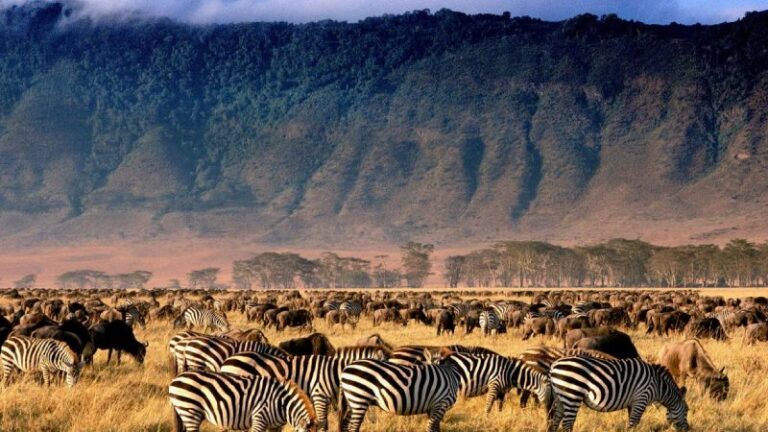
Expect a classic mix rather than a single headline species. Lions are regularly seen, elephants move through the woodland, and the floodplain holds impala, wildebeest, zebra and buffalo. Hippos and waterbirds gather at pools. Wild dogs are possible but not a reason to promise yourself a sighting on a short visit. The Tanzania–Zambia highway runs along the northern edge of the park, so you will be aware of the outside world in a way you are not in central Ruaha. Once you are on the interior loops, that fades.
A guided 4×4 is the way to visit. This is not a casual self-drive in a city hire car, and getting out of the vehicle in the park is restricted in the usual national-park way. If you want a walk, look at nearby options such as Udzungwa, rather than assuming Mikumi offers the same walking culture as Ruaha.
Typical Costs
Mikumi is usually cheaper than a fly-in southern safari, which is one of its advantages. Park fees still apply, and they should be included in a clear quote.
| Item | Typical range |
|---|---|
| Day trip from Dar or Morogoro, per person | About USD 150 to 300, depending on group size and whether lunch is included |
| Overnight safari, per person sharing | About USD 250 to 500, including a mid-range lodge, meals and a game drive |
| Private vehicle from Dar, per vehicle per day | About USD 200 to 350, before some fees and lodging |
Where to Stay
There are lodges and camps in and just outside the park, and hotels in Morogoro if you prefer a town night. Staying close to the gate is the difference between an early start and a late one. For a single overnight, choose proximity over a long list of amenities. If you are continuing to Udzungwa or Iringa the next day, Morogoro can be the more logical bed.
Combining Mikumi with the South or the Coast
Mikumi sits on the way to the southern highlands, so it works as a first safari night after Dar, before Ruaha, or as a last wildlife stop on the way back to the city and the Zanzibar ferry. It also pairs with a visit to the Udzungwa Mountains if you want forest and waterfalls after open-country game viewing. What it does not replace is a full Nyerere boat safari or a week in the north. Use it for what it is: the most accessible proper park from the commercial capital.
A Sample Overnight from Dar es Salaam
Leave the city in the morning, pause in Morogoro if you need fuel or lunch, and enter Mikumi in the afternoon for a first game drive toward the floodplain. Sleep near the park, go out again at first light, and begin the drive back to Dar after late breakfast, or continue toward Iringa if Ruaha is next. That simple shape uses the park’s closeness without turning the visit into a race. If your international flight leaves Dar the same evening, do not cut the return too fine; the highway can surprise you with delays. A mid-afternoon buffer in the city is much calmer than a sprint to the airport.
Tips and Common Mistakes
- Leave Dar earlier than you think you need to, especially on a day trip
- Stay overnight if you can; the morning drive is the best part of the visit
- Use a safari 4×4, not a saloon car
- Do not expect a private, empty reserve beside the highway, but do go beyond the first loop
- Carry water, sun protection and some cash for fees or a simple lunch
- If you have a week, consider whether Nyerere or the north would serve you better as the main safari
Frequently Asked Questions
How far is Mikumi from Dar es Salaam?
The drive is typically around four to five hours, depending on traffic, road works and your exact starting point in the city.
Is a day trip to Mikumi worth it?
Yes, if that is the time you have and you start early. An overnight is more satisfying, because you can use the early morning in the park.
Can I see the Big Five in Mikumi?
Lions, elephants and buffalo are the realistic headline sightings. Rhinos are not a reason to come here, and leopards are always chancy. Treat it as a general wildlife park, not a Big Five checklist.
Is Mikumi safer or easier than the southern parks?
It is easier to reach. The same safari rules apply inside the park, and you should still travel with a reliable driver and vehicle.
Can I combine Mikumi with Ruaha or Nyerere?
Yes. Mikumi is a natural overnight on the way toward Iringa and Ruaha, and it can be a last stop on the way back to Dar from a southern trip.
Get Your Free Custom Tanzania Tour Quote Today!
If you have a short window in Dar es Salaam and want a proper safari day or overnight, our local team can arrange the vehicle, the park time and a nearby stay.
Browse Multi-Day Tours Explore Short Excursions