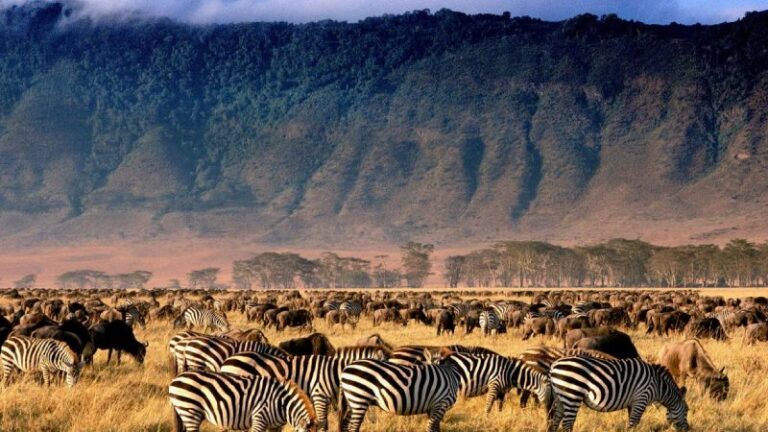
Katavi is the Tanzania safari that still feels far away. In the far west of the country, well beyond the northern circuit and even beyond the usual southern loop, it is a large park with few camps and a dry-season wildlife spectacle that people who have been there talk about in a particular way: hippos packed into shrinking pools, buffalo in enormous herds, and lions that have learned to hunt in that dense, noisy gathering of animals.
It is not a convenient add-on. Getting there takes a flight, or a long overland journey via Mpanda, and most camps operate in a defined season. If you have already seen the Serengeti and want something wilder, or you are building a western itinerary around Kigoma, Mahale or Gombe, Katavi can be the most memorable inland chapter of the trip.
Why People Go All That Way
The park’s reputation rests on the late dry season, roughly from August to October, when water is scarce and animals concentrate on the remaining channels and pools of the Katuma River system and the floodplains around it. Hippos are forced into closer quarters than you usually see, crocodiles gather with them, and buffalo herds can number in the thousands. The scene is intense, sometimes loud, and very different from a quiet morning on an open Serengeti plain.
Outside those months, Katavi is still a big, beautiful park of woodland and floodplain, but it is greener, more dispersed, and logistically harder because some camps close. This is not a place to visit on a vague off-season whim unless you have a camp confirmed and a tolerance for rain and long grass.
Hippos, crocodiles and buffalo around remaining water, with predators never far from the same resource.
You may see other cars at a famous pool, but the park as a whole remains one of the least visited large safari areas in Tanzania.
A flight or a long road via Mpanda is part of the deal. Katavi rewards travellers who accept that.
Best Time to Visit Katavi
Plan for June to October if you can, and aim for the later part of that window if the famous river concentrations are your main reason for coming. June and July can already be very good, with easier general game viewing and slightly less intense crowding at the last water, but August to October is when the classic Katavi images are usually made.
The wet season transforms the floodplains and can make road access difficult. Many camps close. If you only have dates in the long rains, choose a different park rather than forcing Katavi. For broader seasonal context, use the best time to visit Tanzania guide, then confirm camp opening dates specifically for this park.
How to Get to Katavi
By air
Most visitors fly. Shared charters and seasonal scheduled services connect Katavi with other western and southern parks, and sometimes with Dar es Salaam or Arusha, often via a circuit that may also include Mahale. Airstrip and flight days are limited, so the itinerary has to be built around the aircraft. This is also why Katavi is frequently combined with a chimpanzee park rather than booked as a totally isolated destination.
By road
The overland approach is typically through Mpanda, a long journey from almost anywhere you are likely to start. From Kigoma, a transfer toward Mpanda is possible if you already have a western overland plan; see the Kigoma to Mpanda (Katavi) transfer. This is a trip for travellers who like the road and have time, not for a short holiday that also includes Zanzibar and the northern circuit.
- Combine predators and primates on the Western Chimp Expedition if your dates and flights allow.
- Look at the Southern Circuit Wildlife tour if you are already heading away from the north.
- If your trip starts on the lake, begin with planning from Kigoma.
How Many Nights and How a Stay Feels
Three or four nights is the usual stay, and four is better once you have come this far. Game viewing is often focused on floodplains and remaining water, with long, absorbing stops rather than a constant hop from one short sighting to the next. Some camps offer walking or night drives in or beside their areas; rules depend on the location, so ask in advance.
Do not expect the same lodge density or the same last-minute flexibility you might find near Arusha. If a flight moves, you need slack in the plan. If you arrive after a long travel day, keep the first afternoon light.
Typical Costs
Katavi is rarely a budget destination, because access and a short operating season are built into the price. Mid-range and high-end tented camps dominate. Sharing a fly-in circuit with other parks can be more efficient than a one-off charter just for this stop.
| Item | Typical range |
|---|---|
| Mid-range to high-end stay, per person per night | Often USD 600 to 1,400+, including meals, usually excluding or including flights depending on the package |
| A 3 or 4-night fly-in stay, per person sharing | Often USD 2,500 to 5,500, depending on camp and whether flights are bundled |
| Connecting flights on a western circuit | Variable; often several hundred US dollars per sector |
Ask what happens if weather delays a small aircraft, and whether park fees are included. In a remote park, a cheap nightly rate with unclear transfers is not a saving.
Where to Stay
There are only a handful of camps, mostly seasonal and often near the areas that hold water late in the year. Availability in September and October can be tight, so book early. A camp’s location relative to the main floodplain matters more than small differences in tent style. If you are combining Katavi with Mahale, choose camps that share a sensible flight day rather than the prettiest brochure.
What a Typical Day Looks Like
Days start early, as they do in most Tanzania parks, with a drive toward the floodplain or the remaining pools while the air is still cool. Mid-morning can already be hot. A good guide will spend time at a single gathering of animals rather than rushing to “see more,” because the interest in Katavi is often in watching behaviour: hippos shifting and yawning, buffalo coming and going, lions waiting at the edge. After a midday rest, the afternoon drive may return to the same water or explore woodland for elephants and quieter species.
Evenings in camp are simple and dark, with a sense of distance that is part of the appeal. There is little nightlife and little reason to want it. If night drives are offered in your area, they can add a different set of animals, but they are a bonus, not the reason to come.
Combining Katavi with Lake Tanganyika
A strong western itinerary is a few nights in Katavi and then a flight or a carefully timed link to Mahale Mountains for chimpanzee trekking and time on the lake beach. Gombe, reached by boat from Kigoma, is another primate option, usually easier from the town than from Katavi itself. Trying to include the northern circuit, Zanzibar, Katavi and Mahale in a single tight fortnight is how these trips start to fray. Choose a region and do it properly.
Tips and Common Mistakes
- Go in the dry season, ideally later in it, if concentrations are your goal
- Do not try to squeeze Katavi into a standard seven-day northern safari
- Build the itinerary around flight days, then add nights, not the reverse
- Give the park at least three nights after a long journey
- Pack for heat at midday and cooler nights, plus serious sun protection near open water
- Leave extra time if you are continuing to a chimpanzee trek that cannot be delayed
Frequently Asked Questions
Is Katavi worth the journey?
Yes, if you care about remote wildlife and can travel in the dry season. It is less worth it if you only have a few days in Tanzania or you must travel in the long rains.
How do I get to Katavi National Park?
Most visitors fly, often as part of a western or southern circuit. The overland route is typically via Mpanda and is a long road trip.
When is the best time to visit Katavi?
June to October, with August to October usually the most dramatic period for hippos, buffalo and remaining water.
Can I combine Katavi with Mahale or Gombe?
Yes, and that is one of the best ways to justify the travel. It depends on seasonal flights and boat connections from the Lake Tanganyika side.
Is Katavi suitable for a first safari?
It can be, but most first-time visitors are better served by the northern circuit or by Nyerere or Ruaha, which are easier to reach. Katavi shines for travellers who already know they want something remote.
Get Your Free Custom Tanzania Tour Quote Today!
If Katavi is on your mind, our local team can check seasonal flights and camps and tell you honestly whether your dates will do the park justice.
Browse Multi-Day Tours Explore Short Excursions