Nyerere National Park is the name you will now see on maps for much of what travellers used to call the Selous. It is a huge protected area in southern Tanzania, defined as much by water as by dry bush: the Rufiji River and its lakes, channels and sandbanks. A stay here often mixes game drives with boat safaris, which gives the park a character you will not find on the standard northern circuit.
The park is also one of the easiest southern wilderness areas to reach from Dar es Salaam. You can fly in for a few nights, or drive if you have more time. This guide explains what to expect, when to go, how the boat safari works, and how Nyerere compares with Ruaha if you are choosing a southern route.
What Makes Nyerere Distinct
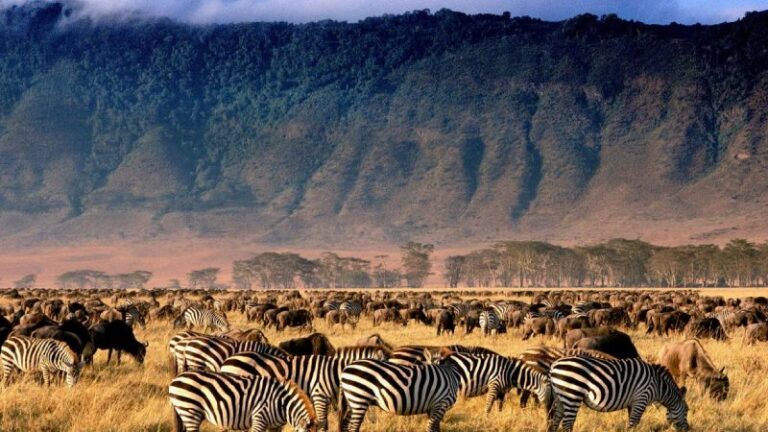
Scale is part of the story, but water is the part you feel. Hippos, crocodiles and waterbirds are part of ordinary afternoons, not a special detour. From a boat you move quietly along the river, stop at a widening of the channel, and watch elephants come down to drink. On land, the woodland and open areas hold lions, giraffes, wildebeest, zebras, impalas and, in good seasons, African wild dogs, a species the old Selous was famous for.
The park is quieter than the central Serengeti in peak months, though it is no longer a secret. Some sectors see more camps than others. A well-chosen lodge still gives you long stretches of river or road where you feel you have the place to yourself.
The signature activity: a slow boat along the river and lakes, excellent for hippos, crocodiles, birds and elephants at the bank.
Standard 4×4 drives cover the woodland and open areas, and some camps add guided walks with a ranger.
The usual starting point, whether you fly to a park airstrip or travel overland from the city.
Best Time to Visit
June to October is the most reliable dry-season window. Wildlife concentrates around remaining water, boat levels are generally easier to manage, and most camps are open. The green months bring richer birdlife and fewer visitors, but heavy rain can affect tracks and, in the wettest weeks, some access. Many camps close or reduce operations around April and May.
If your dates are fixed in the short dry period of January and February, Nyerere can still be excellent, especially if you are prepared for warmer weather and some afternoon showers. Check camp opening dates before you build a tight itinerary around a specific lodge.
How to Get There
By air from Dar es Salaam or Zanzibar
A short scheduled or shared charter flight is the most comfortable approach. Several airstrips serve different camp clusters, so your flight should match your lodge, not a generic “Selous” label. From Zanzibar, a flight can turn a beach week into a bush-and-beach trip without a long road transfer.
By road
The drive from Dar es Salaam is doable in a day, but it is a full transfer rather than a scenic short hop. Road conditions vary with the season, and you should use a safari-prepared vehicle, not a city car. A Dar es Salaam to Nyerere transfer is the practical way to do this if you prefer not to fly. Some travellers also connect from Zanzibar via the mainland; that is a longer logistics chain and needs an overnight plan, not a same-day dash.
- Start with a Nyerere National Park excursion if you have limited time from Dar.
- A Rufiji boat safari is the activity that defines the park.
- For a fuller southern journey, look at the Nyerere and Ruaha Safari.
Boat Safaris, Drives and Walks
A typical stay uses the cool mornings for a game drive and the later afternoon for a boat, or the other way around, depending on light and wind. The boat is not a poor substitute for a vehicle. It is the reason many people choose Nyerere. You cover the river at a different height and speed, and you see a side of the park that road loops miss.
Walking safaris, where they are offered, are usually short and guided, with a focus on tracks and the bush rather than a long trek. They pair well with a three-night stay. Do not expect the same walking culture as Ruaha in every camp; ask what your lodge actually runs.
How Many Nights to Stay
Three nights is the standard first visit. It gives you at least one proper boat outing, two or three drives, and a little slack if a flight is late. Four nights is better if you want a walk as well, or if you are a keen birdwatcher. A one-night dash from Dar is possible but feels short, because a large part of the visit is taken up by the transfer.
Typical Costs
Mid-range lodges on the river are the usual choice. Fly-in packages often look expensive until you compare them with the time saved on the road. As always, park fees and transfers should be listed clearly.
| Item | Typical range |
|---|---|
| Mid-range 3-night fly-in stay, per person sharing | About USD 1,500 to 3,200, depending on season and whether flights are included |
| Luxury river lodges, per person per night | Often USD 700 to 1,400+, season dependent |
| Road transfer from Dar es Salaam, per vehicle | Often about USD 250 to 450 one way, depending on vehicle and group |
| Domestic flight, one way | Often about USD 150 to 300 |
Where to Stay
Choose a camp for its access to both the river and a decent driving area, not only for the look of the dining tent. Some lodges sit on lakes or side channels that are excellent for boats but need longer transfers to the best road circuits. If a boat safari is your main reason for coming, say so when you book so you are not placed in a drier, inland camp.
A Typical Three-Night Stay
Arrive around midday, settle in, and take a late boat or a short afternoon drive. The next two days can follow a simple rhythm: an early game drive, a return for lunch and heat, then water in the afternoon when the light on the river is kinder. If a walk is offered, it usually fits the second morning, when you already know the area around camp. Leave on the last morning after a short activity, with enough margin for the airstrip or the long road back to Dar.
That pattern is deliberately unhurried. The park is large, but you do not need to cover all of it. It is better to learn one stretch of river and a few driving loops well than to spend the stay in transit between distant camps.
Combining Nyerere with the Coast or the South
Nyerere is a natural first or last safari for anyone flying into Dar es Salaam. A frequent plan is three nights in the park and then a flight or a transfer onward to Zanzibar, or a hop to Mafia Island if you want a quieter sea and, in season, whale sharks. You can also continue inland to Ruaha or, if you are travelling overland, pass Mikumi on the way between Dar and the southern highlands. What does not work well is a same-day combination of a full Nyerere game drive and a late international departure; keep a buffer.
If you are already on a northern safari, add Nyerere only if you have extra days and are willing to fly. Driving from Ngorongoro to the Rufiji is not a sensible link on a tight two-week holiday.
Tips and Common Mistakes
- Use the current name, Nyerere, when you search, but understand that older “Selous” references may still appear
- Build the trip around a boat safari, not only around game drives
- Fly if you have fewer than four nights; the road uses up a short visit
- Confirm which airstrip serves your camp
- Bring sun protection for the boat, and a warm layer for early drives
- If you want wild dogs, give the park enough days and go in a drier month, without expecting a guarantee
Frequently Asked Questions
Is Nyerere the same as the Selous?
Nyerere National Park covers a large part of the former Selous Game Reserve, renamed in honour of Julius Nyerere. You will still hear the old name used in conversation and in older travel writing.
How do I get to Nyerere National Park from Dar es Salaam?
The usual options are a short flight to a park airstrip or a full-day road transfer in a suitable vehicle.
Is a boat safari worth it?
Yes. It is the distinctive reason to come here, and for many visitors it is the highlight of a southern Tanzania trip.
Can I combine Nyerere with Zanzibar?
Yes. Flights between Zanzibar, Dar es Salaam and the park make a bush-and-beach itinerary straightforward when schedules align.
Nyerere or Ruaha?
Choose Nyerere if you want a river and a boat safari close to Dar es Salaam. Choose Ruaha if you want a drier, baobab landscape, a stronger walking tradition and a slightly more inland wilderness feel. Many travellers do both.
Get Your Free Custom Tanzania Tour Quote Today!
Tell us whether you want a short fly-in from Dar or a longer southern circuit, and our local team will match camps to the river and the season.
Browse Multi-Day Tours Explore Short Excursions