A Serengeti balloon safari is one of those activities that sounds like a luxury extra until you do it, and then it often becomes the hour people talk about for years. You take off in the half-light, rise over the plains as the sun comes up, and see the park the way no vehicle can: the pattern of tracks and rivers, the scale of the herds, and the quiet between the burner blasts. It is also an early, tightly run operation with a real price tag, so it is worth knowing how it works before you add it to a safari.
This guide covers what the morning feels like, where balloons fly in the Serengeti, what you typically pay, and how to fit a flight into a northern circuit trip without wasting a game-drive day. It is written for travellers already planning a safari, not as a standalone day trip from town. The launch sites are inside the park, and you need to be in the right area the night before.
What the Morning Is Like
Pickup is early, often between 4:30 and 5:30, depending on the camp and the season. You drive in the dark to a launch site on a flat patch of plains. The crew unpacks and inflates the envelope while you have a short safety briefing. When the balloon is upright, you climb into the basket, which is divided into compartments, and take off as the horizon starts to pale.
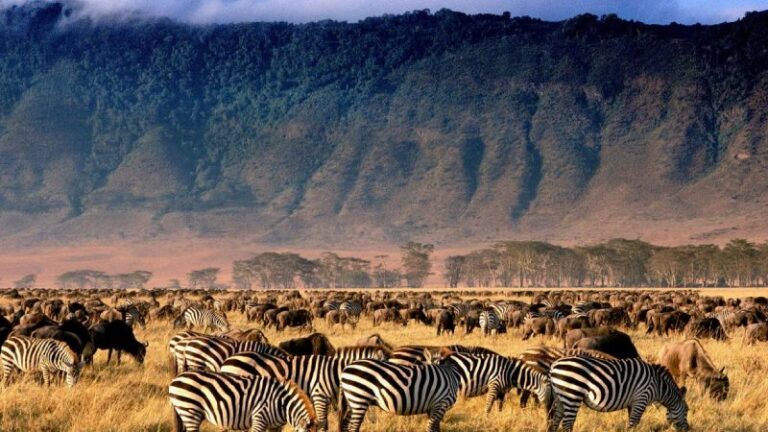
The flight itself usually lasts around an hour. You may fly very low over the grass, then climb for a wider view. From the air, groups of animals become maps: a line of wildebeest, a knot of elephants, a lion walking back from a night hunt. The pilot talks through what you are seeing and uses the wind, not a steering wheel, so the exact route is never guaranteed. After landing, a champagne breakfast in the bush is the traditional end of the outing, before you return to camp or continue on a game drive.
The most common launch zone, practical if your camps are in the central Serengeti and you want resident game below you.
Often the best match from December to March, when calving herds spread across the southern plains.
Useful when your itinerary is already in those areas, including dry-season weeks near the Grumeti or the far north.
Where Balloons Fly, and Why Your Camp Matters
Hot-air balloons in the Serengeti operate from set areas, not from every lodge driveway. If you are staying near Seronera, a central flight is usually the logistical easy option. If you have booked a camp in the far north for river crossings, a central balloon would mean a long pre-dawn transfer, which is a poor use of the morning. Match the flight to the region where you are already sleeping.
This is one reason balloon bookings should be made when the safari is designed, not after you arrive. Your operator needs to know the camp, the date and the transfer time. On a compact itinerary such as a seven-day Tanzania safari, the best slot is usually a morning in the middle of your Serengeti stay, not the day you also change parks.
Best Time of Year
Balloons fly through much of the year, but wind, rain and grass conditions affect both the chance of a launch and the views. The long dry season from June to October is the most popular period, with clearer mornings and, in some regions, huge herds. The short dry window of January and February can be spectacular over the southern plains. During the long rains, flights are more likely to be cancelled and some operations reduce their schedule.
A balloon safari is not the same thing as a guaranteed migration flight. Even in peak months, the herds may be a valley away from the launch site. Treat any animals you see as a bonus and the landscape, light and silence as the main event. If the migration is your priority, place your camps correctly first, then add the balloon in that same area. The best time to visit Tanzania guide is useful when you are choosing those dates.
- Book the flight as part of a Serengeti hot air balloon safari.
- Build the rest of the week around a Classic Serengeti and Crater route.
- If you specifically want river-crossing country, look at a northern Serengeti Mara River safari and a balloon based in that region.
Typical Prices and What Is Included
In recent seasons, a Serengeti balloon safari has typically cost about USD 500 to 650 per person. The price usually includes the pickup from a nearby camp or a meeting point, the flight, the breakfast and a return transfer. It does not include your safari, park fees for the rest of the day, or a professional photo package, which some operators sell separately.
| Item | Typical range or note |
|---|---|
| Balloon flight with breakfast | About USD 500 to 650 per person |
| Flight duration | Around one hour, plus briefing, inflation and breakfast |
| Pickup time | Often 4:30 to 5:30 from camp |
| Minimum age | Often around 7, but operators set their own limits |
| Weight and basket limits | Apply, and must be declared honestly when you book |
Because the activity is expensive, ask what happens if the flight is cancelled for weather. Reputable operators offer a refund or, sometimes, a next-day attempt if your itinerary allows it. Keep a flexible morning behind the booking if you can. Paying in advance is normal; keep the confirmation with your safari documents.
Who Can Fly, and Who Should Skip It
You do not need any flying experience, and the basket is steadier than many people expect. You do need to be able to stand for the flight and to get in and out of the basket with some help. People with recent surgery, serious mobility issues, or certain pregnancy or heart conditions may be asked not to fly. Operators also set weight limits for safety and for the balance of the basket. Declare heights and weights accurately when you book; this is not the place to guess.
Young children are not always accepted, both because of height in the basket and because the morning is long and cold at the start. If you are travelling as a family, confirm the age policy before you pay. Anyone who is uncomfortable with early starts, open baskets or the roar of the burner can enjoy a regular sunrise game drive instead and will not have missed the only way to see the park.
How to Fit It into Your Itinerary
Choose a Serengeti night that does not also involve a long transfer. The afternoon before should be calm, and the morning after the flight can still include a game drive, because you are usually back mid-morning. If you are continuing to Ngorongoro the same day, make sure the balloon will not force a late departure toward the crater.
Photographers often prefer an end position in the basket and a camera strap they can manage while holding on during landing. The landing can be upright and gentle, or it can be a bump and a brief drag. Listen to the pilot, bend your knees if asked, and pack a light jacket. The pre-dawn wait is colder than the rest of a safari day, even in the dry season.
Where to Stay for a Balloon Morning
Stay in a camp that is already inside the flying area you booked. Central Serengeti lodges and tented camps around Seronera are the simplest base for the main operation. If you are in a remote northern or western camp, ask whether a balloon is launched nearby before you pay for a flight that sits four hours down the road. Some high-end camps can arrange private or preferential pickups, but the flight itself is still a shared balloon in most cases.
If you are combining the Serengeti with Tarangire and the crater, keep the balloon on a Serengeti morning and use the days before and after for transfers. A balloon does not replace a game drive; it sits on top of the safari you have already planned.
Practical Tips
- Book the balloon when you book the safari, in the same region as your camp
- Wear layers, closed shoes and a hat that will not blow off easily
- Keep phones and cameras secured; there is little room to pick up a dropped item
- Have a backup plan if wind cancels the launch
- Do not schedule the flight on a heavy transfer day
- Tell the operator about back problems, pregnancy or mobility issues in advance
Frequently Asked Questions
How much is a Serengeti balloon safari?
Plan for about USD 500 to 650 per person, including the flight and a bush breakfast. Confirm the current rate when you book, because seasonal prices move.
How long does the flight last?
The time in the air is typically around one hour. With pickup, inflation, landing and breakfast, the whole outing takes much of the morning.
Is the balloon flight safe?
Flights are run by licensed commercial operators with daily weather checks. As with any aviation activity, there is residual risk, and the pilot may cancel if conditions are not right.
Will I see the migration from the balloon?
Only if the herds are in the area you are flying over that morning. Choose your camp region for the migration first; treat aerial sightings as luck, not a promise.
Can I do a balloon safari as a day trip from Arusha?
Practically, no. You need to be in the Serengeti the night before. It is an add-on to a safari, not a standalone excursion from town.
Get Your Free Custom Tanzania Tour Quote Today!
If you want a sunrise balloon built into your Serengeti days, our local team can match the flight to the right camp and the right morning.
Browse Multi-Day Tours Explore Short Excursions