Almost every northern Tanzania safari passes through Arusha, and almost every traveller who comes here wants to reach the Serengeti. The journey between the two is more than a transfer. On the road, it climbs through farmland and highland forest, runs along the rim of the Ngorongoro Crater and drops onto the endless plains where the safari really begins. By air, it is a short hop with views over volcanoes and savannah.
This guide compares both options, explains how long the drive really takes and shares the stops that turn a long day into a highlight.
Arusha to Serengeti at a Glance
| Option | Distance and Time | Best For |
|---|---|---|
| Private 4×4 by road | About 325 km to the central Serengeti, roughly 7 to 8 hours with stops | Travellers who want to see the landscape and combine Ngorongoro on the way |
| Scheduled light aircraft | About 1 hour from Arusha to Serengeti airstrips, longer with stops | Short trips, the northern Serengeti, travellers who want to save a day |
| Road with an overnight in Karatu | Split into two shorter days | A relaxed pace with a Ngorongoro Crater day in between |
The Road Route Step by Step
The classic route heads west from Arusha towards Makuyuni and Mto wa Mbu, climbs the escarpment of the Great Rift Valley to Karatu, then enters the Ngorongoro Conservation Area. From the crater rim, the road descends onto the short-grass plains towards Naabi Hill Gate, the main southern entrance to the Serengeti, before continuing north to the Seronera area in the centre of the park.
Arusha to Mto wa Mbu and Karatu
The first part of the drive is on a paved highway through farmland, Maasai grazing land and small trading towns. Mto wa Mbu, at the foot of the Rift Valley escarpment, is a lively market town known for its bananas and as the gateway to Lake Manyara. The road then climbs to Karatu, a green highland town surrounded by coffee farms.
Through the Ngorongoro Conservation Area
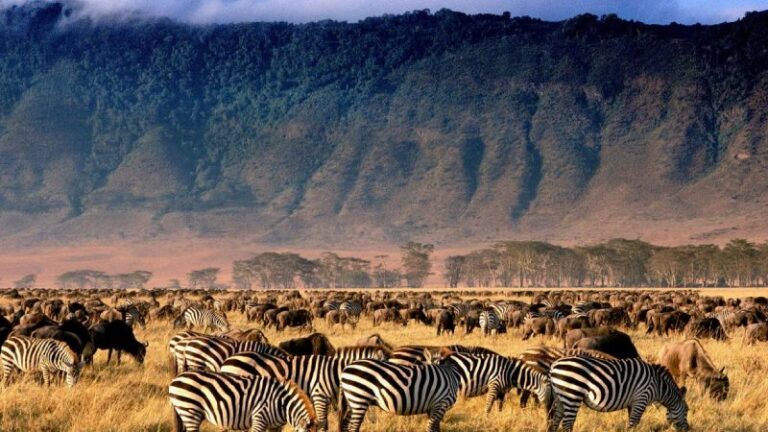
After the Lodoare Gate, the road winds up through highland forest to the rim of the Ngorongoro Crater. On a clear day, the viewpoint over the caldera is breathtaking. Beyond the rim, the road becomes gravel and descends through Maasai grazing land with views towards the Serengeti plains. Conservation area fees apply when you drive through Ngorongoro, even if you are only in transit, so factor them into your budget. Ask us and we will list them clearly in your quote.
Naabi Hill to Seronera
Naabi Hill Gate marks the entry to Serengeti National Park. From here, it usually takes another hour or more to reach the Seronera area, but this is no ordinary transfer: game viewing starts as soon as you pass the gate, and in the green season the southern plains can be full of wildebeest and zebra.
- Our Arusha to Serengeti National Park transfer is private, door to door, with a flexible departure time and free cancellation.
- Prefer to split the journey? Combine Arusha to Karatu with a Ngorongoro day before continuing.
The Best Stops Along the Way
As the road climbs out of Mto wa Mbu, a viewpoint looks down over Lake Manyara and the Rift Valley floor.
A first look into the caldera, often with mist drifting over the floor in the morning.
A short detour leads to one of the most important sites for understanding human evolution, with a small museum. See the Olduvai Gorge Excursion.
The gate area sits on a small hill with views across the plains, a natural stretch-and-picnic stop.
Flying From Arusha to the Serengeti
Scheduled light aircraft depart from Arusha’s small domestic airport to several airstrips across the Serengeti. Flight time to the central Serengeti is about an hour, though routes with intermediate stops take longer. Flying is especially useful if you are heading to the northern Serengeti for the Mara River crossings, which is a very long drive from Arusha.
Light aircraft have strict luggage limits, usually requiring soft bags. Our Tanzania safari packing list explains what fits. At the airstrip, your safari vehicle and driver meet you, so the game drive can start right away.
Road or Flight: Which Is Better?
Neither is better in every case. The road is part of the safari experience and lets you visit Ngorongoro on the way, but it is a long day. Flying saves time and energy, particularly on shorter trips or for the north. Many travellers choose a mix: drive in through Ngorongoro, then fly out of the Serengeti at the end.
- Drive if you want to see the landscape and include Ngorongoro, Karatu or Lake Manyara
- Fly if you have limited days, are travelling to the northern Serengeti or prefer to avoid long road days
- Mix both to see the scenery once and save time on the way back
Where in the Serengeti Are You Going?
The Serengeti is huge, and your final destination changes the journey. Seronera in the centre is the classic stop and is good year-round. The southern plains and Ndutu area, on the edge of the Ngorongoro Conservation Area, are best in the calving season around January and February. The Western Corridor is often best around June and July, and the northern Serengeti around the Mara River is the focus from roughly July to October.
The herds’ position should shape your route. Our guide to the best time to visit Tanzania includes a typical migration calendar, and the Northern Serengeti Mara River Crossing Safari is designed for the crossing season.
Choosing the Right Vehicle
For the Serengeti, a proper safari 4×4 is the best choice. The gravel roads through the conservation area and inside the park are corrugated and dusty, and some areas become muddy after rain. A 4×4 with a pop-up roof also turns the transfer into a game drive, since you can stand up for a better view once you enter the park.
Group size matters too. Couples and small families are comfortable in a standard safari vehicle, while larger groups may prefer a bigger safari minibus or two vehicles. If you are planning to drive yourself, renting a fully equipped vehicle is possible, but read our self-drive safari guide first, because park rules and road conditions are demanding.
Tips for the Long Drive
- Start early to arrive at your camp before dark, as park roads are not driven at night
- Bring a warm layer for the Ngorongoro rim, which can be cold in the morning
- Keep water, snacks and sunscreen in your day bag
- Use the toilets at gates and lodges, as facilities along the route are limited
- Protect your camera from dust on the gravel sections
- Ask your driver to stop at viewpoints. On a private transfer, the pace is yours
Combining the Journey With a Full Safari
Many travellers turn the drive into the first days of their safari. A popular route is Arusha to Tarangire, then Lake Manyara, a night in Karatu with a crater day, and onward to the Serengeti. Our Classic Serengeti and Crater tour follows this pattern, and the Ultimate Northern Circuit adds more time in each area.
For a fuller picture of that longer itinerary, see our guide to an ultimate Northern Circuit safari at local prices.
Once you are in the Serengeti, a Full Day 4×4 Safari Driver in the Serengeti or a Multilingual Serengeti Expert Guide helps you make the most of every game drive. For a special morning, consider the Serengeti Hot Air Balloon Safari.
Returning From the Serengeti
The return journey follows the same road back via Ngorongoro, or you can fly from a Serengeti airstrip to Arusha or directly towards the coast and Zanzibar, depending on the season’s flight schedules. If you are continuing to the beach, flying straight from the park can save a full day of travel. For island ideas, see our guide to the best beaches in Zanzibar.
Frequently Asked Questions
How far is Arusha from the Serengeti?
The drive to the central Serengeti is about 325 kilometres via Karatu and the Ngorongoro Conservation Area.
How long is the drive from Arusha to the Serengeti?
Plan on roughly 7 to 8 hours, including stops at viewpoints, the gates and for lunch.
Is it better to fly or drive to the Serengeti?
Drive if you want to see Ngorongoro and the landscape on the way. Fly if you are short on time or heading to the northern Serengeti.
Do I pay Ngorongoro fees if I only drive through?
Yes. Conservation area fees apply when driving through the Ngorongoro Conservation Area, even in transit.
Can I see animals on the way to the Serengeti?
Yes. Once you pass Naabi Hill Gate, the drive to Seronera is effectively a game drive, and you may see wildlife in the conservation area too.
Get Your Free Custom Serengeti Transfer Quote Today!
Tell us your dates and where in the Serengeti you are heading, and we will plan the drive, the flights or both, at fair local prices.
Browse Multi-Day Tours Explore Short Excursions