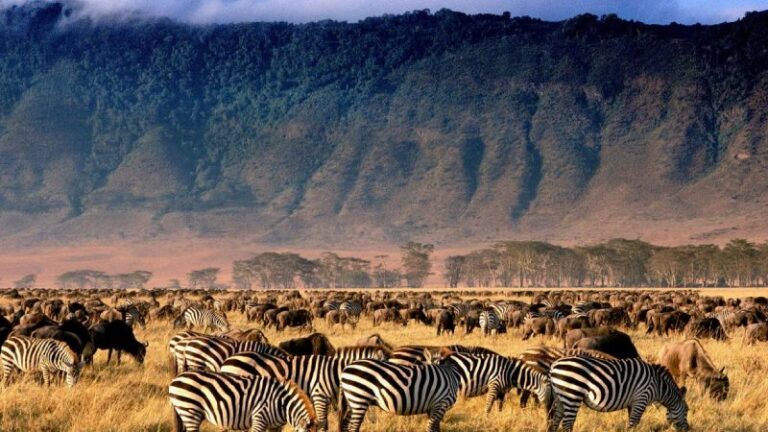
Few places on Earth pack so much wildlife into such a small, dramatic space. The Ngorongoro Crater is a vast volcanic caldera with walls roughly 600 metres high, and on its grassy floor live lions, elephants, buffalo, hyenas, wildebeest, zebras and one of Tanzania’s best chances to see the endangered black rhino. A day spent inside it is one of the highlights of any northern Tanzania itinerary.
The good news is that you do not need a long safari to see it. A well-planned Ngorongoro Crater day trip from Arusha or Karatu is entirely realistic. Here is how to make it work.
Why the Crater Is So Special
The crater formed when a large volcano collapsed in on itself millions of years ago, leaving a bowl of around 260 square kilometres. Its steep walls act like a natural enclosure, and with permanent water, grassland, swamp and forest on the floor, many animals stay year-round instead of migrating.
The crater sits within the Ngorongoro Conservation Area, a UNESCO World Heritage Site where wildlife and Maasai pastoralists share the land. That mix of wilderness and living culture sets it apart from Tanzania’s national parks.
Open plains where lions rest, hyenas patrol and herds of zebra and wildebeest graze. Black rhino are present but shy, so sightings take patience and a good guide.
A shallow soda lake on the crater floor that often attracts flamingos, depending on water levels and season.
A patch of yellow-barked acacia woodland where elephants and baboons are often seen among the trees.
Designated picnic areas near water, where hippos wallow and visitors are allowed to step out of the vehicle.
How a Ngorongoro Crater Day Trip Works
Most day trips follow a similar rhythm, because the crater has fixed descent and ascent roads and park rules limit how long vehicles can stay on the floor. Your guide plans the route around those rules and the morning light.
| Time of Day | What Happens |
|---|---|
| Early morning | Depart from Karatu or Arusha, enter the conservation area at the gate and drive up to the crater rim |
| Morning | Descend to the crater floor, often with mist lifting off the plains, and begin the game drive |
| Midday | Picnic lunch at a designated site, usually near water |
| Afternoon | A final loop for anything you missed, then the climb back up to the rim |
| Late afternoon | Drive back to your lodge in Karatu or onward to Arusha |
Starting From Arusha or Karatu
Karatu, a small highland town close to the conservation area’s main gate, is the most convenient base. Starting there gives you an early entry and more time on the crater floor. From Arusha, the drive is longer, usually around three hours each way, so a very early start is essential if you want a full day inside.
We arrange both options. A private Arusha to Ngorongoro transfer or Arusha to Karatu transfer sets you up the evening before, while the Ngorongoro Crater Excursion handles the full day with vehicle, driver and guide.
- Book the Ngorongoro Crater Excursion with a private 4×4 and an experienced local driver.
- Prefer a specialist? Add a Ngorongoro Crater and Conservation Area Guide.
- Want flexibility? A Full Day 4×4 Safari Driver lets you set the pace.
The Best Time to Visit the Crater
Because many animals live in the crater year-round, Ngorongoro is a reliable destination in every season. The dry months from June to October make for easier tracking and clearer roads, but the crater can also be busy then. The green season from November to May brings lush scenery and fewer vehicles, and the nearby southern Serengeti and Ndutu plains host the wildebeest calving season around January and February.
Whatever the month, early mornings on the rim are cold. At over 2,000 metres, temperatures can feel surprisingly chilly before the sun warms things up, so bring a warm layer even if the afternoon will be hot.
Tips for a Better Crater Day
- Start early: the first hours bring the softest light and active predators
- Bring layers: cold on the rim, warm on the floor by midday
- Pack binoculars: rhinos are often seen at a distance
- Carry snacks and water: there are no shops on the crater floor
- Stay in the vehicle except at designated picnic and rest areas
- Ask your guide to plan around the crowds, not with them
Sightings are never guaranteed, and a good guide will be honest about that. But the concentration of wildlife here means even a single day often feels like a full safari.
Maasai Life in the Conservation Area
Unlike a national park, the Ngorongoro Conservation Area is also home to Maasai communities who graze cattle, goats and sheep across the highlands. On the drive to the rim you will often pass herders in red and blue shukas walking their animals between grazing areas. It is a reminder that this landscape has been shared by people and wildlife for generations.
If you would like to learn more, a respectful cultural visit can be added on the way in or out. The Maasai Beadwork and Cultural Workshop is a hands-on way to meet local artisans, and the Datoga Blacksmith and Homestead Visit introduces another of the region’s pastoral communities. Always ask before taking photos of people, and let your guide handle introductions.
Photography Tips for the Crater
The crater floor is wide and open, so a zoom lens makes a real difference for distant rhinos and resting lions. Early morning mist and late afternoon light from the rim give the most atmospheric landscape shots. Keep a cloth handy, as dust settles on everything in the dry season. Above all, stay patient at a sighting, because waiting quietly usually produces the best images.
Beyond the Crater: Adding More to Your Day
The Ngorongoro Conservation Area is much larger than the crater itself. If you have an extra day in Karatu, several experiences round out the visit beautifully:
- Olduvai Gorge: A key site in the story of human evolution, on the road towards the Serengeti. The Olduvai Gorge Excursion includes the site museum.
- Empakaai Crater: A smaller, quieter crater with a lake on its floor and a steep walking trail. Try the Empakaai Crater Hike.
- Olmoti Crater: A shorter highland walk to a waterfall, available as the Olmoti Crater Hike.
- Karatu farms: Coffee plantations and highland villages around Karatu. The Karatu Coffee Farm Experience is a relaxed afternoon option.
Combining Ngorongoro With Other Parks
Ngorongoro lies on the main road between Arusha and the Serengeti, which makes it a natural part of a northern circuit safari. A popular short combination is Tarangire, Lake Manyara and Ngorongoro over three days. Our Tarangire, Ngorongoro and Lake Manyara 3-Day Safari covers exactly that.
For longer trips, the crater pairs naturally with the Serengeti. The Classic Serengeti and Crater tour connects both, and if you are travelling onward, see our guide on getting from Arusha to the Serengeti.
The crater also sits naturally inside a longer Northern Circuit safari that spends more time in each park.
What to Expect on the Road
The descent and ascent roads into the crater are steep, narrow and unpaved, which is why only suitable 4×4 vehicles are used. The drive up to the rim from the gate climbs through dense highland forest, with views across the caldera from the viewpoints along the rim road. On a clear morning, the first view down into the crater is unforgettable, so ask your driver to stop.
Roads on the crater floor are graded tracks, and vehicles must stay on them to protect the grassland. Your driver knows the network well and will position the vehicle for the best view and light without crowding the animals.
Frequently Asked Questions
Can you do the Ngorongoro Crater in one day?
Yes. A day trip from Karatu is easy, and from Arusha it is possible with an early start. You will spend the core hours of the day on the crater floor.
Can you see the Big Five in the Ngorongoro Crater?
All of the Big Five live in the Ngorongoro area. Lions, elephants and buffalo are often seen in the crater, black rhino are present but shy, and leopards are much harder to find on the open floor.
How long does it take to get from Arusha to the crater?
Plan on around three hours each way by road, depending on stops and traffic. Staying in Karatu shortens the morning drive considerably.
Is the Ngorongoro Crater worth it?
For most travellers, yes. The density of wildlife and the scenery of the caldera make it one of the most rewarding single days on any Tanzania safari.
Do I need a guide for the crater?
Visits are made in a vehicle with a licensed driver-guide. A specialist guide can add deeper knowledge of wildlife, geology and Maasai culture.
Get Your Free Custom Ngorongoro Quote Today!
Tell us where you are staying and how much time you have. We will plan the transfers, the vehicle and the guide for your crater day at fair local prices.
Browse Multi-Day Tours Explore Short Excursions