Tanzania is one of the great wildlife countries on Earth, home to the Serengeti migration, the Ngorongoro Crater, Mount Kilimanjaro and chimpanzee forests on the shores of Lake Tanganyika. Exploring the Tanzania National Parks is the best way to experience this natural wonder, from the famous northern circuit to remote parks that see only a handful of visitors each year.
Free Consultation: Chat with a local expert about Tanzania’s national parks on WhatsApp.
The travel experts from TanzaniaAssist are online every day to help you with current information, trip planning, and booking for park guides, entrance tickets, transport to and within the parks, accommodation in or near the parks, and everything you may need for your national park adventure in Tanzania, always at fair local prices.
Below you’ll find the complete list of Tanzania’s 21 national parks managed by Tanzania National Parks (TANAPA), plus Jozani-Chwaka Bay, Zanzibar’s own national park, and the Ngorongoro Conservation Area, which is not a national park but belongs on every safari plan. Each entry has an overview, what to see, who visits, when to go, and direct tour and Google Maps links to plan your adventure. Kigosi, declared a national park in 2019, has since been turned into a forest reserve and is no longer on TANAPA’s list.
🗺️ Tanzania National Parks List
- Serengeti National Park
- Ngorongoro Conservation Area (not a national park)
- Kilimanjaro National Park
- Tarangire National Park
- Lake Manyara National Park
- Arusha National Park
- Nyerere National Park
- Ruaha National Park
- Mikumi National Park
- Jozani-Chwaka Bay National Park (Zanzibar)
- Udzungwa Mountains National Park
- Saadani National Park
- Mkomazi National Park
- Gombe Stream National Park
- Mahale Mountains National Park
- Katavi National Park
- Rubondo Island National Park
- Saanane Island National Park
- Kitulo National Park
- Burigi-Chato National Park
- Ibanda-Kyerwa National Park
- Rumanyika-Karagwe National Park
- Ugalla River National Park
🦁 Serengeti National Park
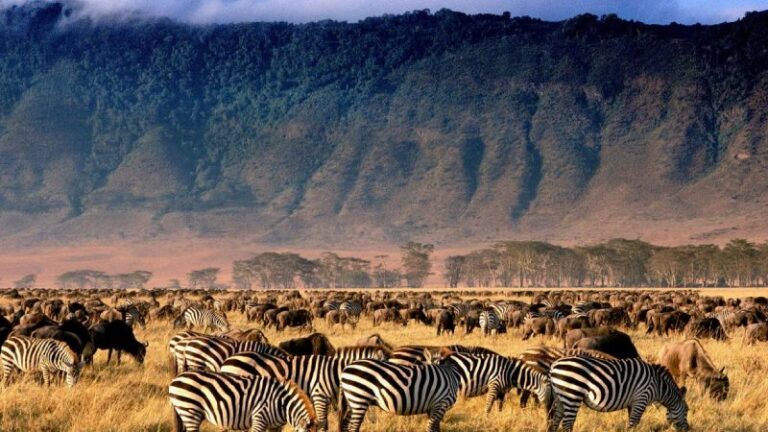
Serengeti National Park is Tanzania’s oldest national park, first gazetted in 1951, and a UNESCO World Heritage Site since 1981. It is famous for the Great Migration, well over a million wildebeest with hundreds of thousands of zebra and gazelle moving in a yearly circle that follows the rain. The central Seronera valley holds water all year and is the most reliable area for lion, leopard and cheetah, while the Mara River crossings in the north draw photographers from around the world. Visitors reach the park by road from Arusha via Ngorongoro or fly to one of its airstrips. Sunrise balloon flights and walking safaris add a different view of the plains, and our Serengeti team helps you pick the right area for your month.
Best time to visit: June–October for the river crossings; December–March for calving
Tours: Serengeti National Park Tours
Map: Show on Google Maps
🌋 Ngorongoro Conservation Area (not a national park)
Ngorongoro is not a national park but a conservation area, run by the Ngorongoro Conservation Area Authority instead of TANAPA, where Maasai pastoralists still live and graze their cattle beside the wildlife. Its centrepiece is the Ngorongoro Crater, the world’s largest intact and unfilled volcanic caldera, with walls about 600 metres high around a floor of grassland, swamp and a soda lake. It is one of the most reliable places in Tanzania to see black rhino, alongside lion, elephant and buffalo. The wider area also holds Olduvai Gorge and the Laetoli footprints, key sites for the story of human origins. It is a UNESCO World Heritage Site, and its fees and rules are separate from the national parks. Base yourself in Ngorongoro and go down at first light.
Best time to visit: Year-round; the crater floor is quietest early in the morning
Tours: Ngorongoro Crater Tours
Map: Show on Google Maps
🏔️ Kilimanjaro National Park
Kilimanjaro National Park protects Africa’s highest mountain, a UNESCO World Heritage Site since 1987. Uhuru Peak on the rim of Kibo reaches 5,895 metres, and the climb passes from rainforest through heath and moorland to alpine desert and the last summit glaciers. No technical climbing skills are needed, but acclimatisation is everything, so longer routes such as Machame give a much better chance of reaching the top. The park gates at Machame, Marangu, Londorossi and Rongai are all within an hour or two of Moshi. Trekkers, adventure seekers and day hikers who want to walk the lower rainforest trails all start here, and our Kilimanjaro team arranges guides, porters and transfers.
Best time to visit: January–March and June–October
Tours: Kilimanjaro National Park Tours
Map: Show on Google Maps
🐘 Tarangire National Park
Tarangire National Park is shaped by the Tarangire River, the only permanent water for a great distance in the dry months. Between about July and October, animals from the wider Maasai Steppe gather along it, creating one of the densest concentrations of elephants in East Africa. The rolling landscape is full of ancient baobab trees and termite mounds, quite unlike the open Serengeti plains. TANAPA records more than 550 bird species, and the green season brings excellent birding with very few vehicles. Only about two hours by road from Arusha, it is often combined with Lake Manyara and Ngorongoro, and our Tarangire team can plan the full loop.
Best time to visit: July–October
Tours: Tarangire National Park Tours
Map: Show on Google Maps
🦩 Lake Manyara National Park
Lake Manyara National Park lies in a narrow strip between the Rift Valley escarpment and a shallow soda lake. In a single morning you pass from spring-fed groundwater forest with baboons and blue monkeys to open floodplain with elephant and buffalo, and on to the lake shore. The park is known for lions that rest in the acacia trees and, in the wet season, for large flocks of flamingos, with more than 400 bird species recorded. A treetop walkway offers a view from the canopy. Around 90 minutes by road from Arusha, it is ideal for first-time visitors and short safaris, and pairs easily with Lake Manyara lodges and nearby Ngorongoro.
Best time to visit: June–October for game; November–June for birds
Tours: Lake Manyara National Park Tours
Map: Show on Google Maps
🦒 Arusha National Park
Arusha National Park is small, close to the city and often overlooked, yet it packs three landscapes into one visit: the forested Ngurdoto Crater, the colourful Momella lakes and the slopes of Mount Meru, which rises to about 4,562 metres. Walking safaris with an armed ranger and canoeing on the lakes let you leave the vehicle, meeting giraffe and buffalo at ground level while black-and-white colobus move overhead. The three to four day Meru climb is a favourite acclimatisation trek before Kilimanjaro. Only about 40 minutes from Arusha, the park is perfect for an arrival or departure day.
Best time to visit: Year-round; clearest views June–October
Tours: Arusha National Park Tours
Map: Show on Google Maps
🛶 Nyerere National Park
Nyerere National Park is the largest national park in Tanzania, created in 2019 from the northern part of the Selous Game Reserve, a UNESCO World Heritage Site since 1982. Its heart is the Rufiji River, which spreads into lakes, channels and sandbanks full of hippos and crocodiles. Boat safaris on the river and walking safaris with an armed ranger make it very different from the northern parks. Nyerere is also one of the most important places in Africa for the endangered African wild dog. Most visitors fly in from Dar es Salaam in under an hour, or make the drive of about six hours by road.
Best time to visit: June–October
Tours: Nyerere National Park Tours
Map: Show on Google Maps
🐆 Ruaha National Park
Ruaha National Park is Tanzania’s second-largest national park and one of its great predator parks, yet it sees only a fraction of the northern circuit’s visitors. It sits where eastern and southern African species meet, so greater and lesser kudu, sable and roan antelope can be seen in the same area. Lion, leopard, cheetah, large elephant herds and rare African wild dog live here, and TANAPA records more than 570 bird species. In the dry months the Great Ruaha River shrinks to a chain of pools where the wildlife gathers. The park is about 108 km by road from Iringa, or a short flight from Dar es Salaam or Arusha.
Best time to visit: June–October
Tours: Ruaha National Park Tours
Map: Show on Google Maps
🦓 Mikumi National Park
Mikumi National Park is the easiest big safari park to reach from Dar es Salaam, about 288 km away on a tarred road via Morogoro. Its Mkata floodplain, open grassland framed by the Uluguru and Rubeho mountains, is often compared to a small Serengeti. Buffalo, zebra, wildebeest, giraffe, elephant and lion are all regularly seen, and yellow baboons and Lichtenstein’s hartebeest are common. Mikumi borders Nyerere to the south, so it is part of a much larger ecosystem. It works well as a two-day trip from Dar es Salaam or as the first stop on a southern route to Udzungwa and Ruaha.
Best time to visit: June–October
Tours: Mikumi National Park Tours
Map: Show on Google Maps
🐒 Jozani-Chwaka Bay National Park (Zanzibar)
Jozani-Chwaka Bay is Zanzibar’s only national park, managed by the Zanzibar government rather than TANAPA. Covering about 50 km² in the south of Unguja island, it protects groundwater forest, coral-rag forest and the mangroves of Chwaka Bay. Most visitors come for the Zanzibar red colobus, an endangered monkey found nowhere else on Earth, and some groups near the entrance can be watched from just a few metres. A raised boardwalk leads through the tidal mangrove forest. The park lies on the road from Stone Town to the east-coast beaches and is easily done in half a day, often with a spice farm, from anywhere in Zanzibar.
Best time to visit: Year-round
Tours: Jozani Forest Tours
Map: Show on Google Maps
💧 Udzungwa Mountains National Park
Udzungwa Mountains National Park is a hiking park rather than a game-drive park, protecting part of the ancient Eastern Arc Mountains. TANAPA calls it the Galápagos of Africa for its endemic species: the Udzungwa red colobus and the Sanje mangabey live nowhere else, and the grey-faced sengi was only described by science in 2008. The classic walk climbs through rainforest to the Sanje Waterfalls, with a natural pool at the base and views over the Kilombero valley, while longer treks cross the plateau over several days. The park is about 380 km from Dar es Salaam via Mikumi, and the TAZARA railway stops at Mang’ula near the gate. Our Morogoro team can combine it with Mikumi.
Best time to visit: June–October; the waterfalls are fullest after the rains
Tours: Udzungwa Mountains National Park Tours
Map: Show on Google Maps
🏖️ Saadani National Park
Saadani National Park is the only national park in Tanzania that reaches the sea, where the bush meets the beach. Grassland with palms and baobabs, coastal forest and mangroves along the Wami River lead to a long sandy shore on the Indian Ocean. Boat trips on the Wami are the highlight, with hippos, crocodiles and rich birdlife, and green turtles come ashore to nest on Madete beach, which TANAPA says happens between August and December. There are fewer animals than in the big inland parks, so it suits travellers who want a short safari combined with the coast. It is about 131 km by road from Dar es Salaam via Bagamoyo, or reached from Tanga via Pangani.
Best time to visit: June–September and January–February
Tours: Saadani National Park Tours
Map: Show on Google Maps
🦏 Mkomazi National Park
Mkomazi National Park is dry acacia and commiphora country that runs north-east to the Kenyan border, where it joins Tsavo West in one large ecosystem. The Pare and Usambara mountains rise along its edges, and on clear days Kilimanjaro is visible. It is home to dry-country animals the famous northern parks mostly lack, such as gerenuk, fringe-eared oryx and lesser kudu, as well as African wild dog. Mkomazi is best known for its fenced black rhino sanctuary and breeding programme. TANAPA counts more than 450 bird species. The main Zange gate is just 6 km from Same on the Moshi to Dar es Salaam road, an easy detour from Kilimanjaro or the Usambara Mountains.
Best time to visit: June–October
Tours: Mkomazi National Park Tours
Map: Show on Google Maps
🐵 Gombe Stream National Park
Gombe Stream National Park is a small strip of steep valleys and forest on the shore of Lake Tanganyika, north of Kigoma, and one of the most important places in the history of science. Jane Goodall began studying its chimpanzees here in 1960 and soon recorded them using tools, and the research has continued ever since. Today visitors hike through humid forest to spend time with a habituated chimpanzee community under strict health rules. There is no road: the park is reached by boat from Kigoma in about two to three hours. Many travellers add a swim in the clear lake or a visit to historic Ujiji.
Best time to visit: Late June–October
Tours: Gombe Stream National Park Tours
Map: Show on Google Maps
🌳 Mahale Mountains National Park
Mahale Mountains National Park rises straight out of Lake Tanganyika to 2,462 metres at Nkungwe peak, and there are no roads inside the park. Its forests hold a large population of wild chimpanzees, and the community visitors track has been studied by Japanese researchers since 1966. Finding them can take from twenty minutes to several hours of steep walking, and time with them follows strict rules. Afterwards you can snorkel in the clear lake, the second deepest in the world and home to hundreds of endemic cichlid fish. Most visitors arrive by charter flight and boat, often combined with Katavi, while Kigoma is the gateway by boat.
Best time to visit: June–September
Tours: Mahale Mountains National Park Tours
Map: Show on Google Maps
🦛 Katavi National Park
Katavi National Park lies in the far west of Tanzania and is one of the least visited parks in the country, mostly because of the distance. Those who make the journey in the late dry season see something special: as the Katisunga floodplain shrinks to a few pools, hundreds of hippos crowd into them, crocodiles dig into the mud banks, and huge buffalo herds and elephants come down to drink, with lions close behind. There are very few camps and almost no other vehicles. Most visitors fly in by charter, often combined with Mahale. It is the park for travellers who have done the northern circuit and want true wilderness, with Kigoma as the nearest hub.
Best time to visit: August–October
Transfer: Kigoma ⇄ Mpanda (Katavi) Transfer
Map: Show on Google Maps
🏝️ Rubondo Island National Park
Rubondo Island National Park lies in the south-western corner of Lake Victoria and protects forest, papyrus swamp and freshwater beaches. Its forest is a remnant of lowland rainforest, explored on guided walks with a ranger. Between 1966 and 1969 the Frankfurt Zoological Society released 16 chimpanzees from European zoos onto the island; their descendants live wild here, though they are shy and harder to track than at Mahale or Gombe. The island is also excellent for birds, with many fish eagles, and the swamps shelter the sitatunga antelope. Catch-and-release fishing for Nile perch is popular. Rubondo is reached by flight or by boat from the Mwanza region.
Best time to visit: June–September
Tours: Rubondo Island National Park Tours
Map: Show on Google Maps
🪨 Saanane Island National Park
Saanane Island National Park is the smallest national park in Tanzania, a 2.18 km² granite island in Lake Victoria just a few minutes by boat from Capri Point in Mwanza. TANAPA calls it the only national park inside a city. It is not a wilderness, but an easy and relaxing outing: walking trails wind between huge balancing boulders, with zebra, impala, klipspringer, rock hyrax and vervet monkeys living free, more than 100 recorded bird species, and views back across the water to the city. No vehicle is needed. Since 2025 a few tents allow an overnight stay on the island, a peaceful way to watch the sunset over the lake.
Best time to visit: Year-round; driest June–September
Tours: Saanane Island National Park Tours
Map: Show on Google Maps
🌸 Kitulo National Park
Kitulo National Park is a high grassland plateau at about 2,600 metres in the southern highlands, locally called the Garden of God and by botanists the Serengeti of Flowers. It is regarded as the first national park in tropical Africa created mainly to protect plants. From late November to April the plateau bursts into bloom, with more than 350 plant species including over 40 kinds of ground orchids, lilies, lobelias and red-hot pokers. There is no big game and no large predators, so it is a park for walkers, botanists and birders. The rare kipunji monkey, unknown to science until 2005, lives in the nearby Livingstone Forest. Nights are cold from June to August. Kitulo is reached by road from Mbeya.
Best time to visit: Late November–April, during the flowering
Tours: Kitulo National Park Tours
Map: Show on Google Maps
🌾 Burigi-Chato National Park
Burigi-Chato National Park was created in 2019 by joining the former Burigi, Biharamulo and Kimisi game reserves, and it is one of the least visited parks in Tanzania. It stretches from near Lake Victoria westwards towards the Rwandan border, across rolling hills, savanna, miombo woodland and a chain of lakes, the largest being the long, narrow Lake Burigi. TANAPA lists elephant, lion, leopard, buffalo, giraffe, zebra, roan, topi and the swamp-dwelling sitatunga. Tourism is just beginning, with campsites, a few park cottages, walking safaris and canoeing, but no lodges yet. It suits adventurous travellers who see it as an expedition, reached by road from the Mwanza region.
Best time to visit: June–October and January–March
Plan your visit: Chat with a local expert
Map: Show on Google Maps
🌄 Ibanda-Kyerwa National Park
Ibanda-Kyerwa National Park became a national park in 2019 and sits in the far north-west corner of Tanzania, where the Kagera River forms the border with Rwanda and Uganda. Akagera National Park lies on the Rwandan bank, and from one point you can see three countries. The park has savanna, rolling hills, river valleys and woodland, with buffalo, roan, topi, eland, impala and waterbuck on the plains, leopard along the river, hippos in the Kagera and blue monkeys in the forest. TANAPA records more than 200 bird species. Facilities are simple, with a public campsite, so it suits self-reliant explorers. The gateway town is Bukoba, about 221 km away by road.
Best time to visit: July–September and December–February
Plan your visit: Chat with a local expert
Map: Show on Google Maps
🏞️ Rumanyika-Karagwe National Park
Rumanyika-Karagwe National Park, upgraded from a game reserve in 2019, lies in the far north-west of Tanzania near the Ugandan border. It is named after King Rumanyika of Karagwe, who welcomed the explorers John Hanning Speke and James Augustus Grant in 1861 on their search for the source of the Nile. The park is a deep valley with a slow, winding river leading into small lakes and swamps, framed by forest and tall-grass acacia woodland. TANAPA lists buffalo, waterbuck, leopard, bushbuck, baboons and monkeys, and more than 300 bird species. It is small and very few people visit; camping is the only accommodation, and you explore on game drives or on foot with a ranger.
Best time to visit: January–February and June–August
Plan your visit: Chat with a local expert
Map: Show on Google Maps
🦌 Ugalla River National Park
Ugalla River National Park, created in 2019, protects miombo woodland and grassland in Tabora Region in western Tanzania. It is named after the Ugalla River, the only permanent water in the park during the dry season; in the rains it spreads into pools, oxbow lakes and swamps. It is one of the few places in Tanzania where both sable and roan antelope live, and TANAPA also lists elephant, lion, leopard, African wild dog, greater kudu and Lichtenstein’s hartebeest. The wetlands hold shoebills and wattled cranes. Tourism is new and small-scale, with game drives, walking safaris, birdwatching and camping. Roads are open in the dry season only, from June to early November, from Tabora about 170 km away.
Best time to visit: June–October
Plan your visit: Chat with a local expert
Map: Show on Google Maps
🌍 Plan Your Tanzania National Park Adventure with TanzaniaAssist
Each of Tanzania’s national parks offers something unique, from the endless plains of the Serengeti and the elephant valleys of Tarangire to chimpanzee forests, flower-covered plateaus and quiet islands in Lake Victoria. Whether you dream of the Great Migration, climbing Kilimanjaro, or a boat safari on the Rufiji River, our travel experts at TanzaniaAssist are here to help. Contact us anytime to plan your perfect national park trip, compare routes, and find the best parks for your interests, travel dates, and budget, at fair local prices.
Featured photo: Serengeti National Park, by Eric Kilby, licensed under CC BY-SA 2.0, cropped and lightly enhanced.